Blog · 26 Oct 2026
Which Oil for Which Dish? A Simple Guide to Groundnut, Mustard, Sesame and Coconut Oil
By LivOil Team
Every Indian kitchen has a favourite oil, and often a reason for it: "my mother always used this one". But different oils behave differently in the pan, and each brings its own flavour to a dish. Choosing the right one for the job makes food taste better and keeps your oils fresher.
This guide covers four oils many families use and where each works best. It is about taste and cooking, not medical claims. For health questions, speak to a doctor or dietitian.
Groundnut (Peanut) Oil
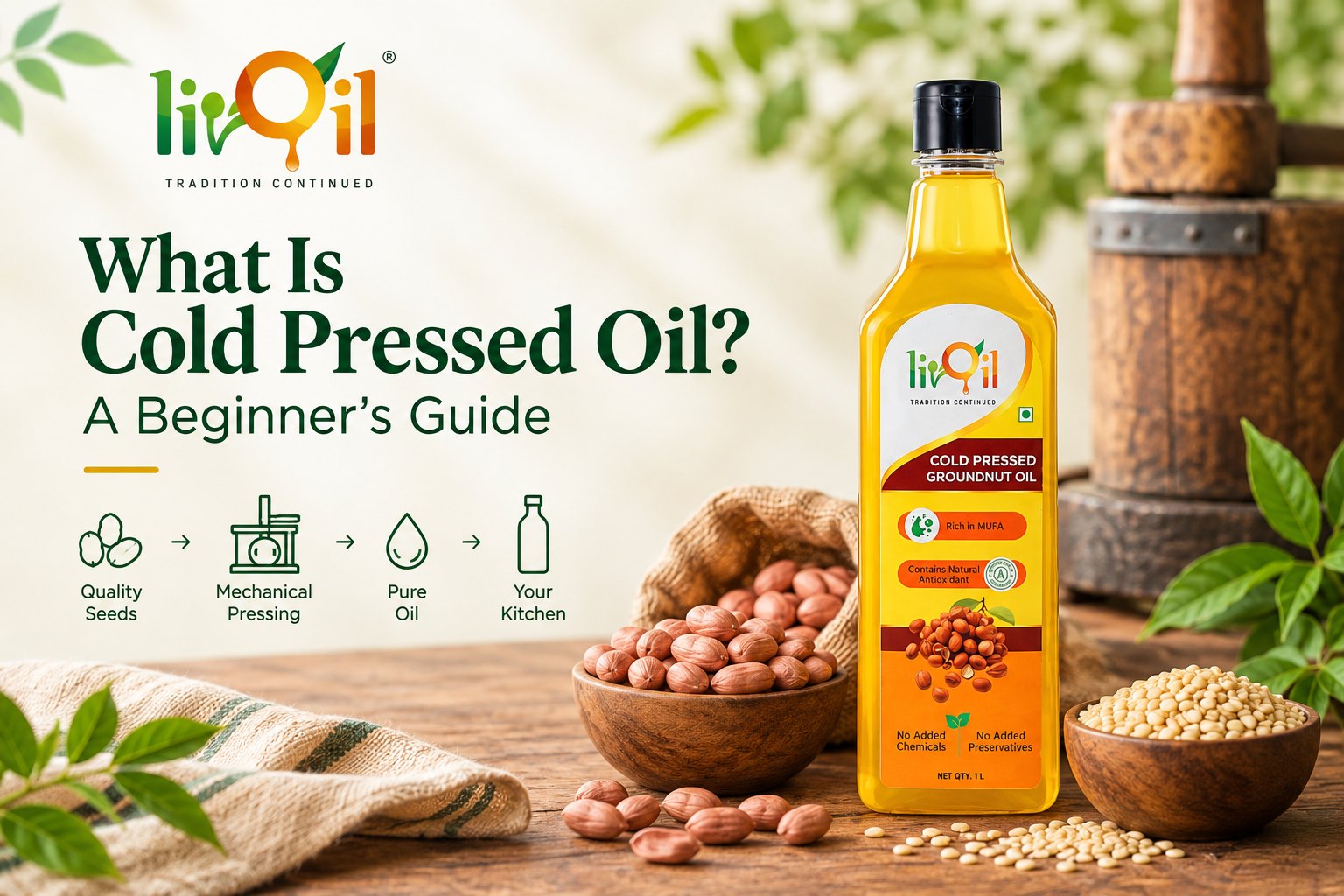
Flavour: mild and slightly nutty. A cold pressed groundnut oil smells of roasted peanuts. Good for: everyday curries, sabzi, stir-fries, frying snacks and parathas. Notes: It is one of the most versatile oils in the kitchen. Because it has a fairly high smoke point, it is a popular choice for shallow and deep frying. Always check your producer's guidance for the oil you have.
Mustard Oil
Flavour: sharp, pungent and peppery, with a distinct aroma. Good for: pickles, fish and meat curries, Kashmiri and Bengali dishes, tempering vegetables and massaging into dough for some traditional breads. Notes: Many cooks heat mustard oil until it just starts to smoke and then let it cool slightly before using it, which softens the sharpness. A little goes a long way. Pungency varies between brands, so start with a small amount.
Sesame (Til) Oil
Flavour: nutty and warm, richer than groundnut. Good for: tadka, South Indian dishes, chutneys, salad dressings and finishing dishes after cooking. Notes: Cold pressed sesame oil can burn if overheated, so use moderate heat. Adding a spoonful at the end brings out the aroma.
Coconut Oil
Flavour: sweet and distinct, with a tropical aroma. Good for: Kerala and coastal curries, thoran, frying fish, and baking some sweets. Notes: It solidifies in cool weather, which is normal. Warm the bottle gently in a bowl of warm water to liquefy it.
Quick Comparison
Oil | Flavour | Typical use |
|---|---|---|
Groundnut | Mild, nutty | Everyday cooking, frying |
Mustard | Sharp, pungent | Pickles, fish, regional curries |
Sesame | Warm, nutty | Tadka, dressings, finishing |
Coconut | Sweet, tropical | Coastal and Kerala dishes, baking |
How to Pick for a Recipe
Think about flavour. Do you want the oil to be tasted? Use mustard, sesame or coconut. Do you want it in the background? Use groundnut.
Match the heat. High-heat frying calls for oils that handle it. Gentle cooking and finishing suit nuttier, more delicate oils.
Think about tradition. Regional recipes usually evolved around a local oil. Using it often gives the taste you remember.
Start small. If you are trying a new oil, buy a small bottle and use it in one dish before committing.
Cooking Tips for Cold Pressed Oils
Do not overheat. Cold pressed oils retain more of their natural character. If oil smokes heavily, turn the heat down and start again with fresh oil.
Do not reuse oil many times. Repeated heating changes the taste and smell.
Use clean, dry spoons. Water spoils oil.
Measure. A teaspoon fewer than you think is often enough with strongly flavoured oils.
Storing Your Oils
Keep bottles tightly closed, in a cool, dark cupboard away from the stove.
Buy sizes you will finish within a few months.
Natural sediment at the bottom is normal for unfiltered oil.
If the smell turns sour or unpleasantly sharp, stop using it.
Frequently Asked Questions
Can I mix oils? Yes. Many people blend, for example groundnut with a little sesame for flavour. Keep each in its own bottle and mix as you cook.
Do I need a different oil for each dish? Not necessarily. Two or three oils cover most home cooking. A neutral everyday oil and one or two flavourful ones is a good start.
Why does my oil look cloudy in winter? Some oils naturally thicken or turn cloudy in cool temperatures. This is normal and clears at room temperature.
Explore Our Oils
You can see our range of single-seed cold pressed oils at LivOil. If you enjoy traditional Kashmiri products, you may also like Orvami.
For Small Food Brands
If you make food products and want to reach more customers, ViralPulse has a practical guide to social media marketing for small businesses in India.
The Short Version
Use groundnut for everyday cooking, mustard for pickles and strong regional dishes, sesame for tadka and finishing, and coconut for coastal recipes. Store oils cool and dark, and do not overheat them.